Fringe repair, by hand
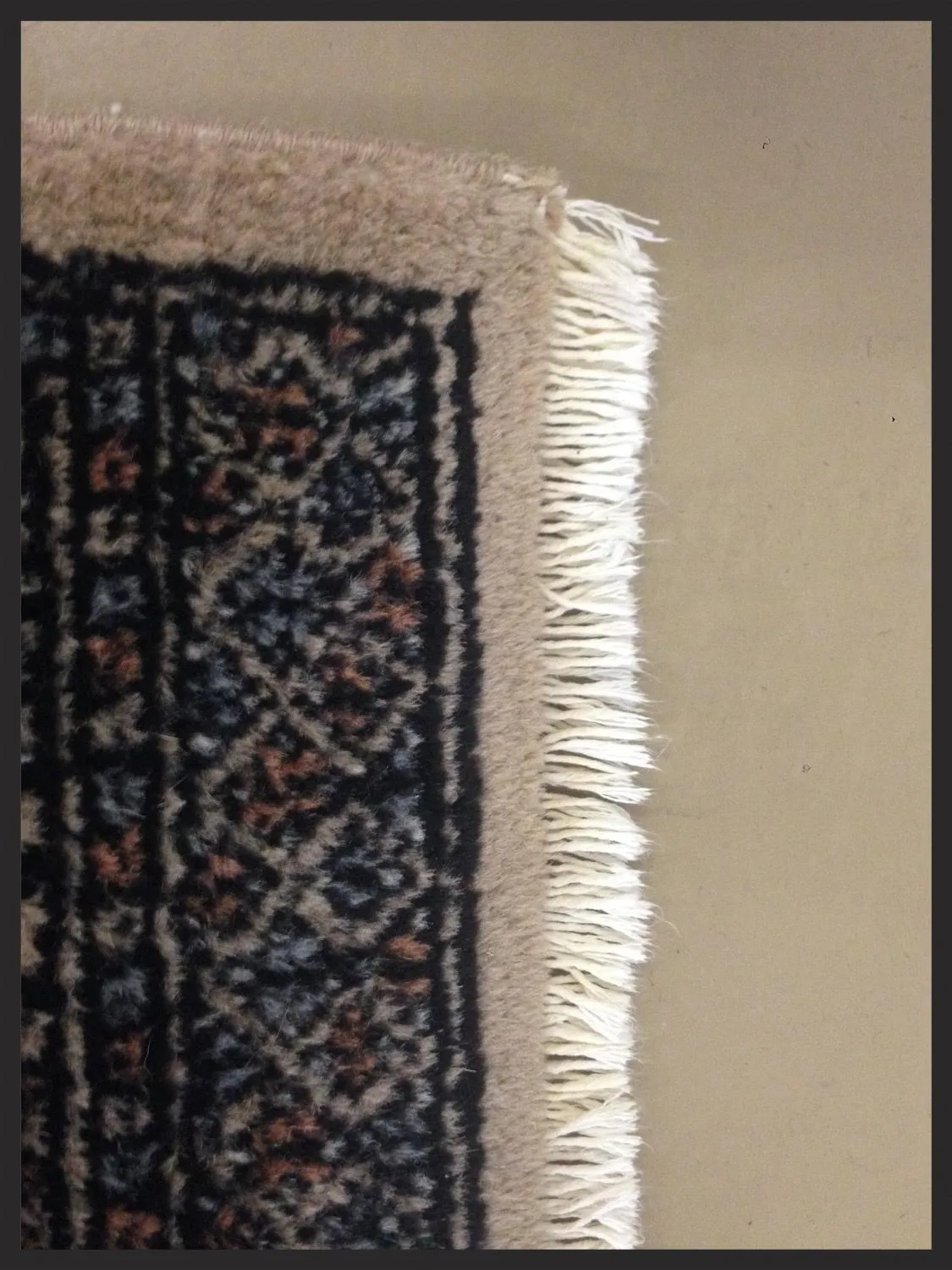
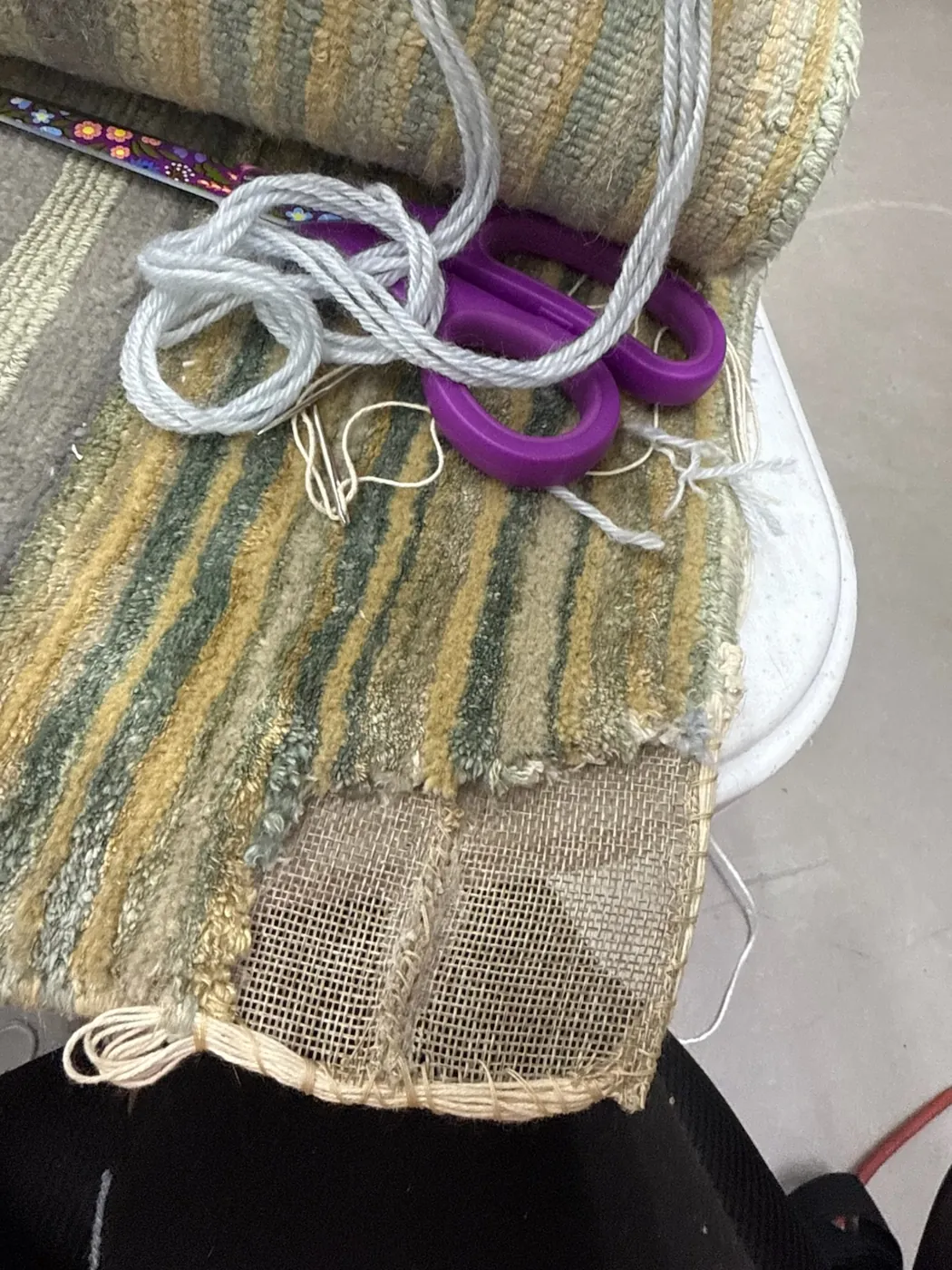
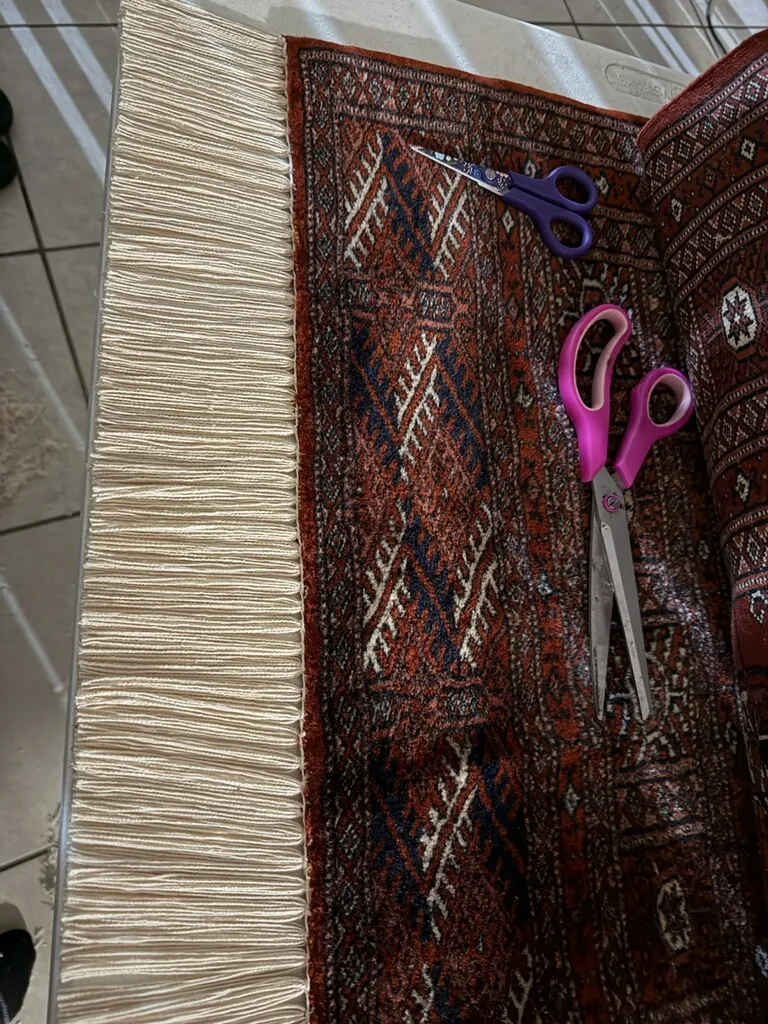
Fringe isn't decoration — it's the warp, the foundation threads the whole rug is tied onto. Once it wears through, the knots start walking out a row at a time. Overcasting binds that edge back down, stitch by stitch, by hand.
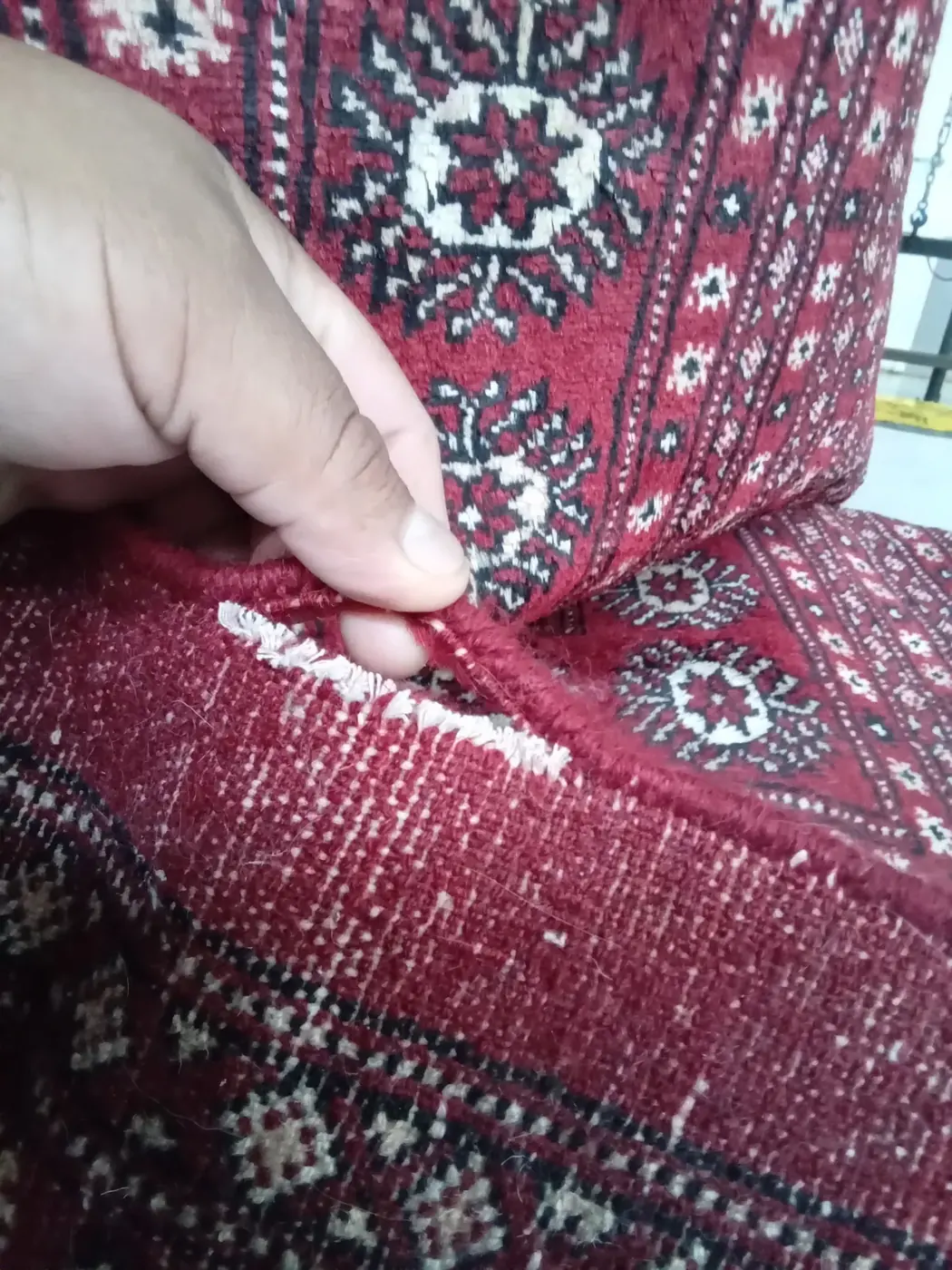
Needle, thread, and patience
Frayed edges and thinning fringes are how good rugs start to die. Caught early, most of that damage can be stopped by hand — serged, bound, or overcast at the same Plantation shop that washes your rug.
Describe the damage. We'll tell you if it can be repaired and what it takes.
Prefer to talk? Call or text (954) 719‑5093 — se habla español —. Your exact price is set at the evaluation, before any work begins.
Why edges fail first
The sides of a woven rug are its seams. Every knot in the field depends on the selvage — the wrapped edge — holding the structure together.
Vacuum beater bars, chair legs, dogs, and plain foot traffic chew at those wrapped edges year after year. Once the wrapping wears through, rows of pile start releasing, and the damage accelerates: what begins as a loose inch becomes a missing corner.
Edge damage never gets cheaper by waiting.
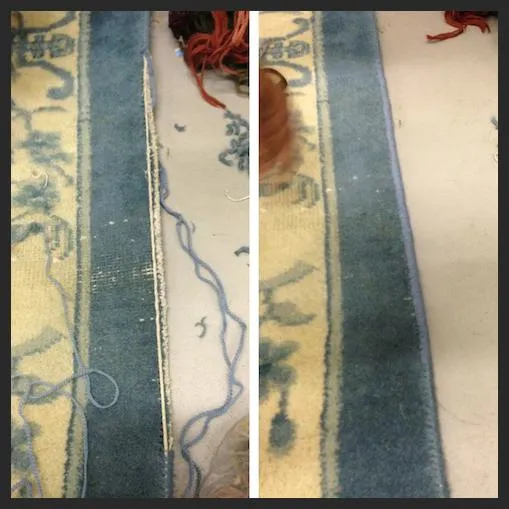
The repair is straightforward when the edge is caught early — reinforce, then re-wrap. Wait until the foundation itself is loose and the same edge needs rebuilding row by row. When we inspect your rug at pickup, we’ll show you exactly where its edges stand and quote the fix before any work begins.
Fringe isn't decoration — it's the warp, the foundation threads the whole rug is tied onto. Once it wears through, the knots start walking out a row at a time. Overcasting binds that edge back down, stitch by stitch, by hand.
The repair bench
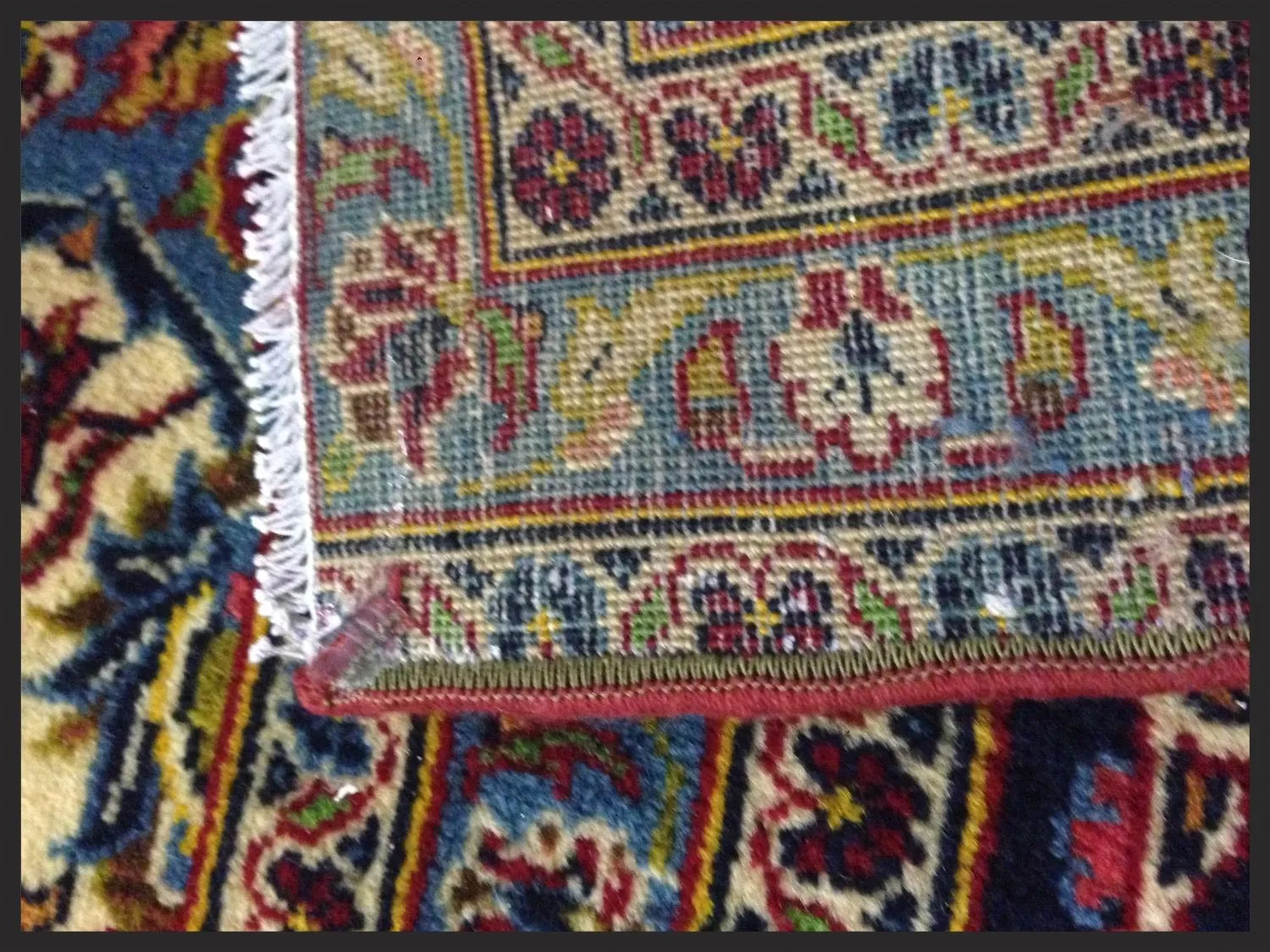
The edges of an Oriental rug are re-wrapped by hand with wool, cotton, or synthetic yarn matched to the original. Slow work, but it restores the edge the way the weaver intended and keeps the sides from ever looking “patched.”
For machine-made and contemporary rugs, machine serging produces a tight, uniform wrapped edge quickly and economically. We choose hand or machine based on the rug’s construction — and tell you why.
Cut carpet and custom rugs get a fabric binding sewn over the raw edge. Available in a wide range of colors, pressure-dyed against fading and stain-resistant — it finishes the edge cleanly and stops fraying for good.
When fringe knots wear away, the rug’s end rows are exposed. We unravel back to sound foundation, then lock the final row with an interior hand stitch so the field cannot release further. Decorative end stitches are available to dress the finish.
Weak or previously repaired edges are rebuilt and reinforced before serging, so the new wrap anchors into solid structure instead of failing fabric. It’s the difference between a repair that lasts and one that returns.
After cleaning or repair we can apply fiber protector against spills, and wrap rugs for storage with moth repellent — worth considering before a summer away or a renovation, since closets in humid Broward are where moths do their best work.
Honest scope
Sometimes the honest answer is: leave it, or replace it.
A machine-made rug near the end of its life may cost more to re-edge than it would to replace — we’ll tell you that at the inspection rather than sell you the work. A hand-knotted piece with sentimental or market value usually justifies the repair many times over; a worn synthetic from a big-box store usually doesn’t.
Every repair we propose comes with its reason and its price up front. If you decide the work isn’t worth it, your rug still comes home washed, and nothing extra appears on the bill.