Step by step
What are the seven steps, exactly?
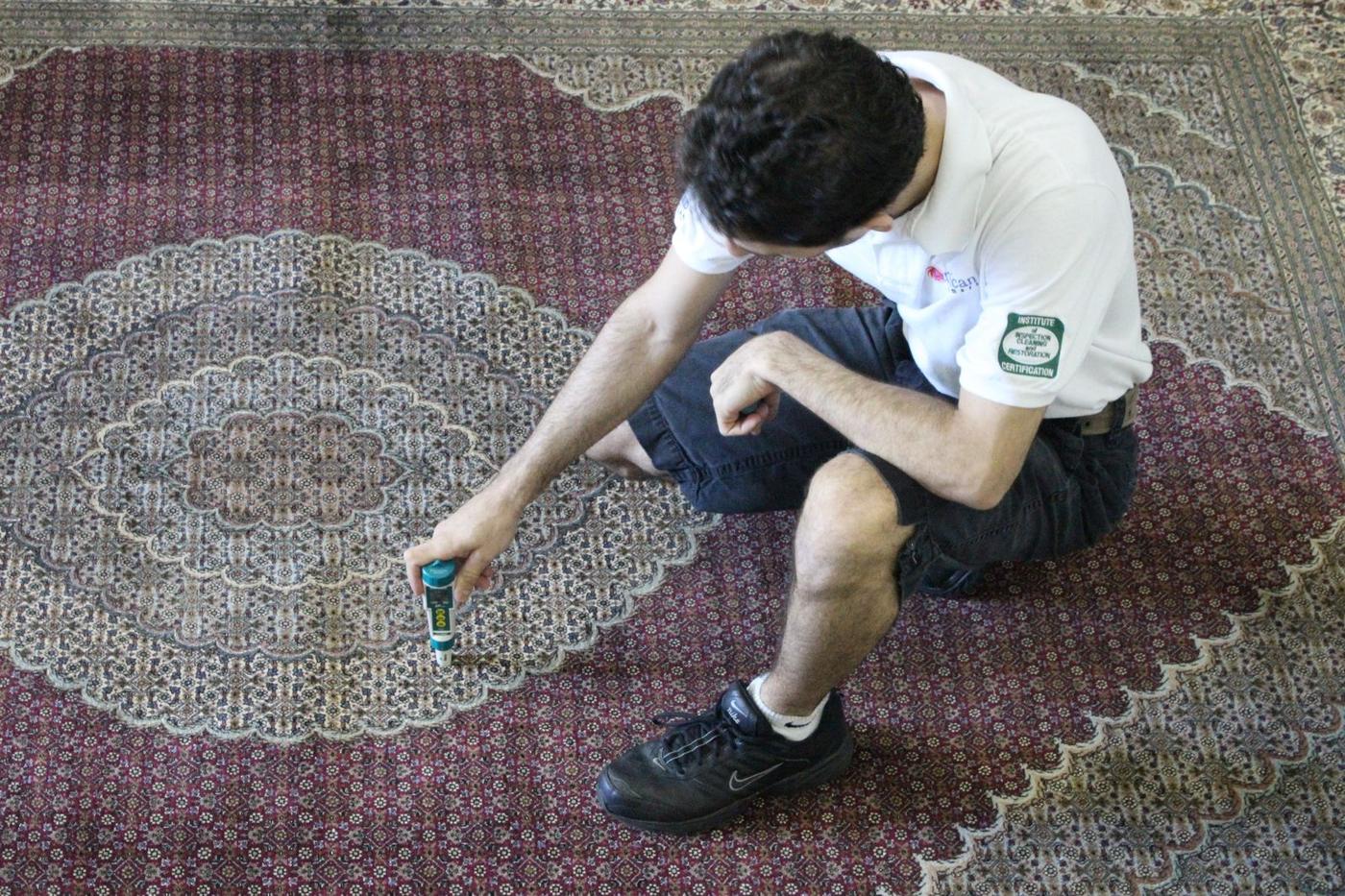
Inspection & fiber analysis
Before anything else we work out what your rug actually is: hand-knotted or machine-loomed, wool or silk or synthetic, natural dyes or chrome. Each combination behaves differently in water, and this reading determines everything that follows. Existing stains, odors, and weak spots are logged and pointed out to you.
Vibration dusting
The rug is fed through a duster that vibrates dry soil out of the foundation — the sandy Broward grit that settles below the pile where household vacuums never reach. Removing it dry matters: wet grit grinds fibers down like sandpaper. The pile lifts noticeably once the dirt lets go.
Dye testing & pre-treatment
Every color field is tested for bleeding before the wash. Reds and blues in hand-dyed rugs can migrate exactly the way a stray red sock ruins white laundry — so we find out first, not during. Stubborn stains and urine spots get targeted pre-treatment matched to what caused them.
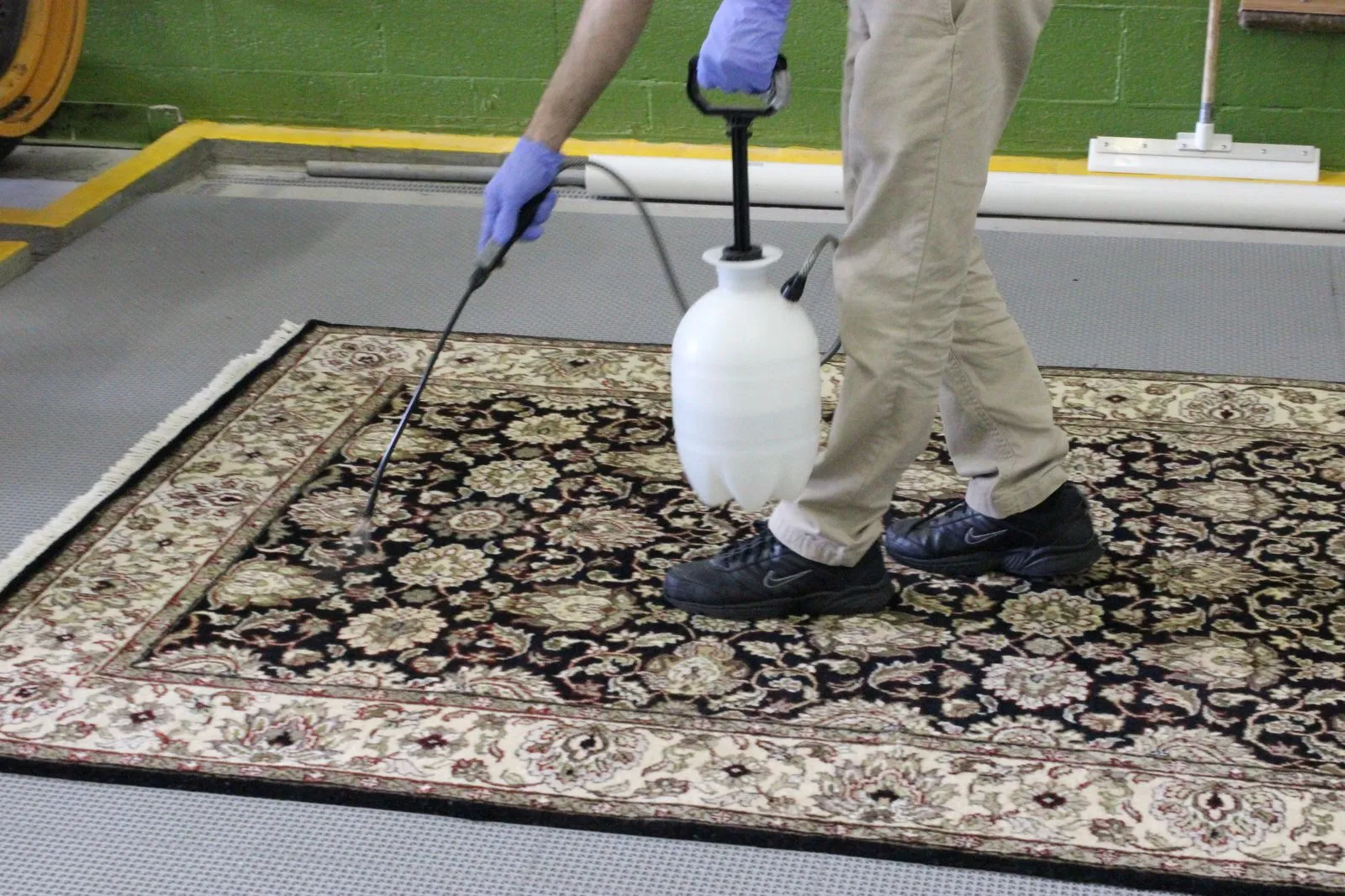
Pre-spray
A water-based, biodegradable cleaning agent — kept as close to pH-neutral as possible — is applied evenly across the pile and fringes. Gentle chemistry costs a little more effort, but it protects the dyes and the lanolin in wool. Silk rugs get their own dedicated products.
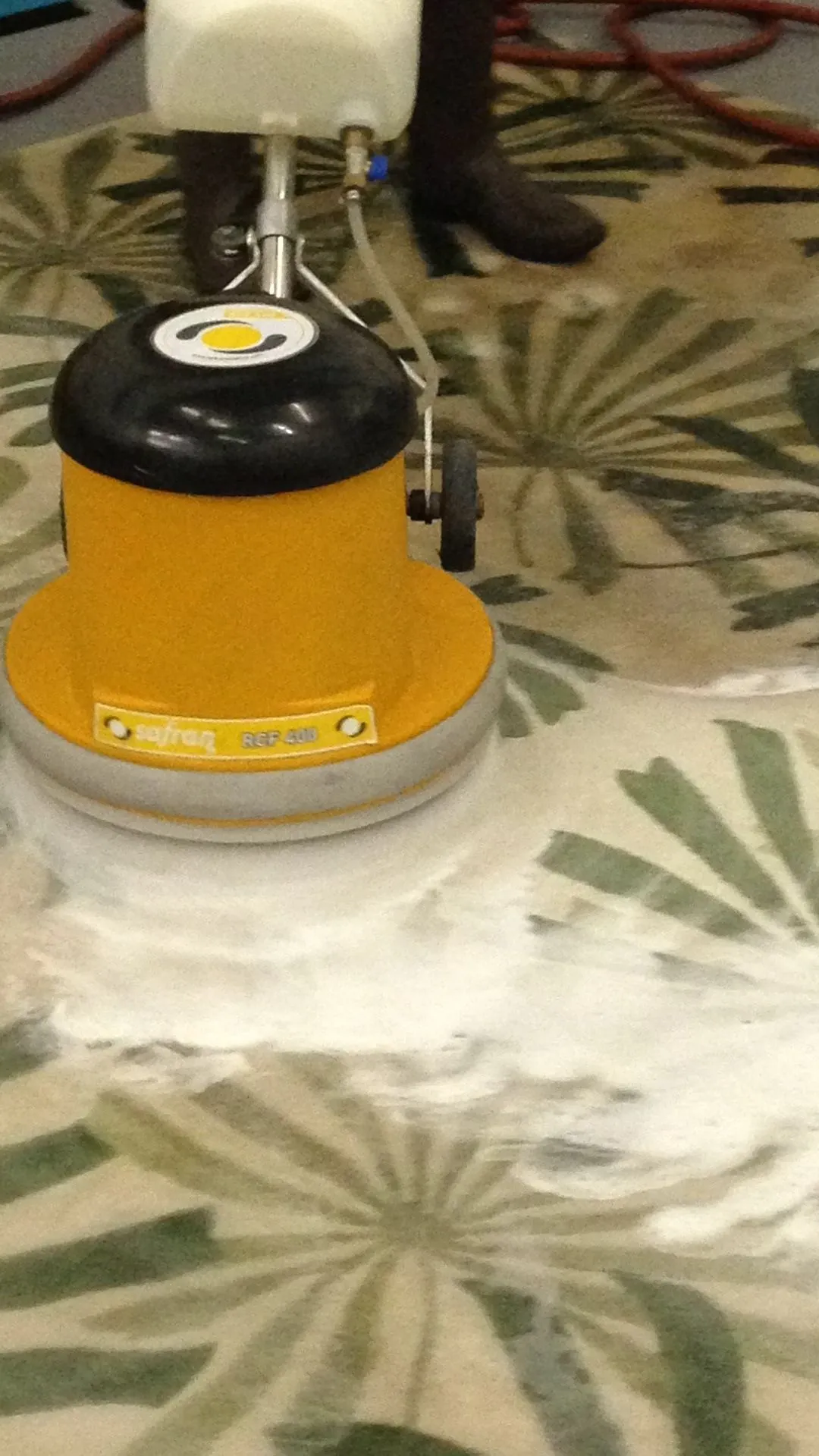
Rotary shampoo
A hand-guided rotary machine works the shampoo through the pile with a soft buffing action. It is methodical, overlapping work — each pass loosens soil the dusting couldn’t reach, without the aggressive agitation that breaks down knots and fringe anchors.
Cold-water rinse & wring
Soft jets of cold water flush the shampoo — and everything it lifted — completely out of the rug. Residue left behind attracts new dirt fast, which is how “cleaned” rugs resoil in weeks. The wringer then extracts most of the moisture in a single controlled pass.
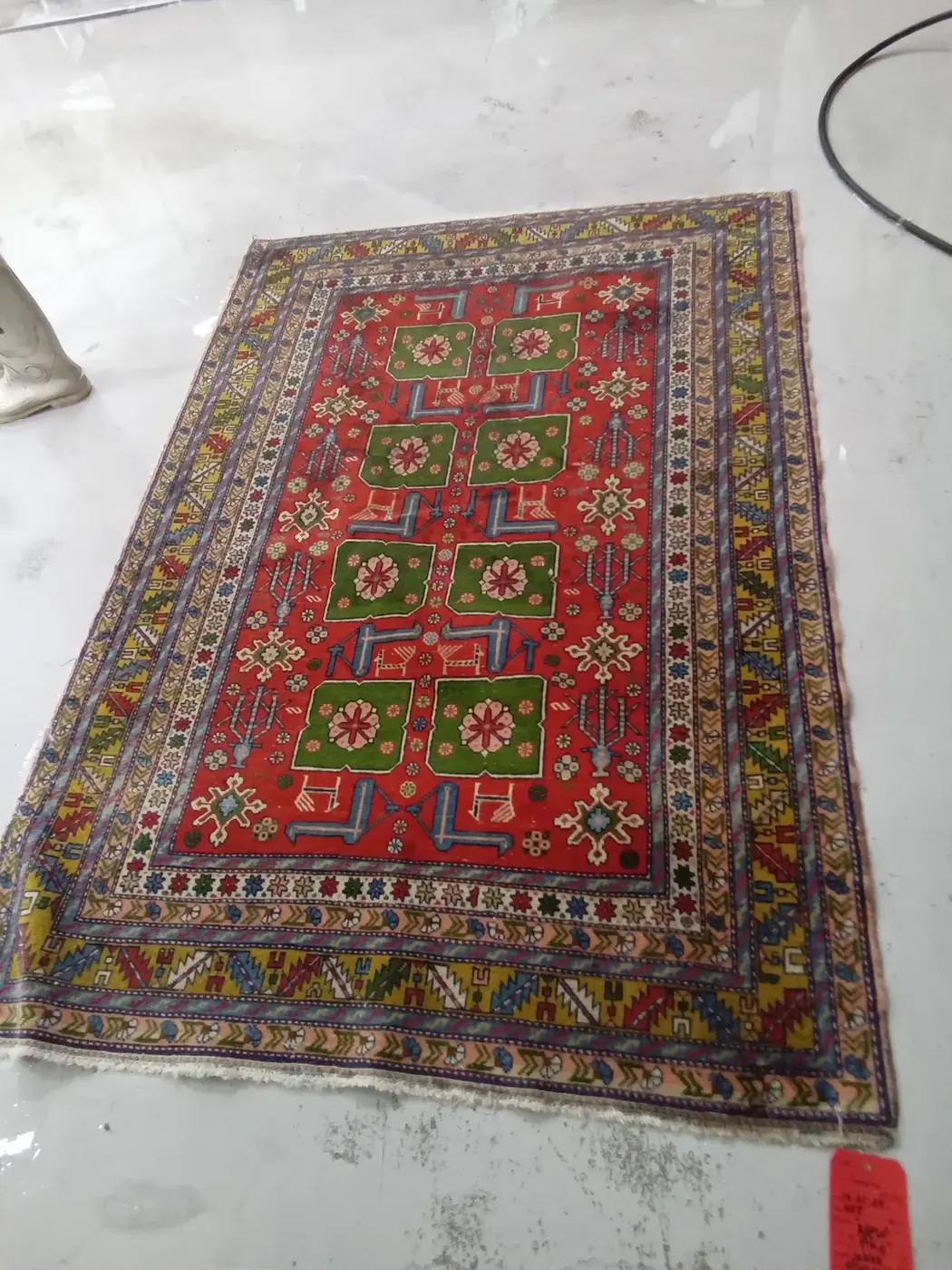
Controlled drying & grooming
The rug hangs in a temperature-controlled drying room for several days and is only released when moisture meters say it is truly dry — in Florida’s humidity, guessing is how mildew starts. Fringes are hand-finished, the pile is groomed and re-vacuumed, and the rug is rolled for delivery.