Dogs happen · Cats especially
The smell isn’t on your rug — it’s in it, down in the foundation where sprays can’t follow. Getting it out takes a full wash. We’ll tell you honestly what treatment can achieve for your rug before you spend anything.
The chemistry problem
Because the spot you cleaned is the surface, and the accident didn’t stay on the surface.
Urine wicks straight down through the pile into the cotton foundation and spreads sideways — a saucer-sized stain on top is often a dinner-plate-sized deposit underneath. As it dries it crystallizes, and every humid Plantation afternoon those salts drink moisture from the air and release odor all over again.
That’s why the smell “returns” on muggy days and why supermarket sprays only mask it: the deposit is physically out of reach from above.
You can’t rinse a foundation you can’t reach.
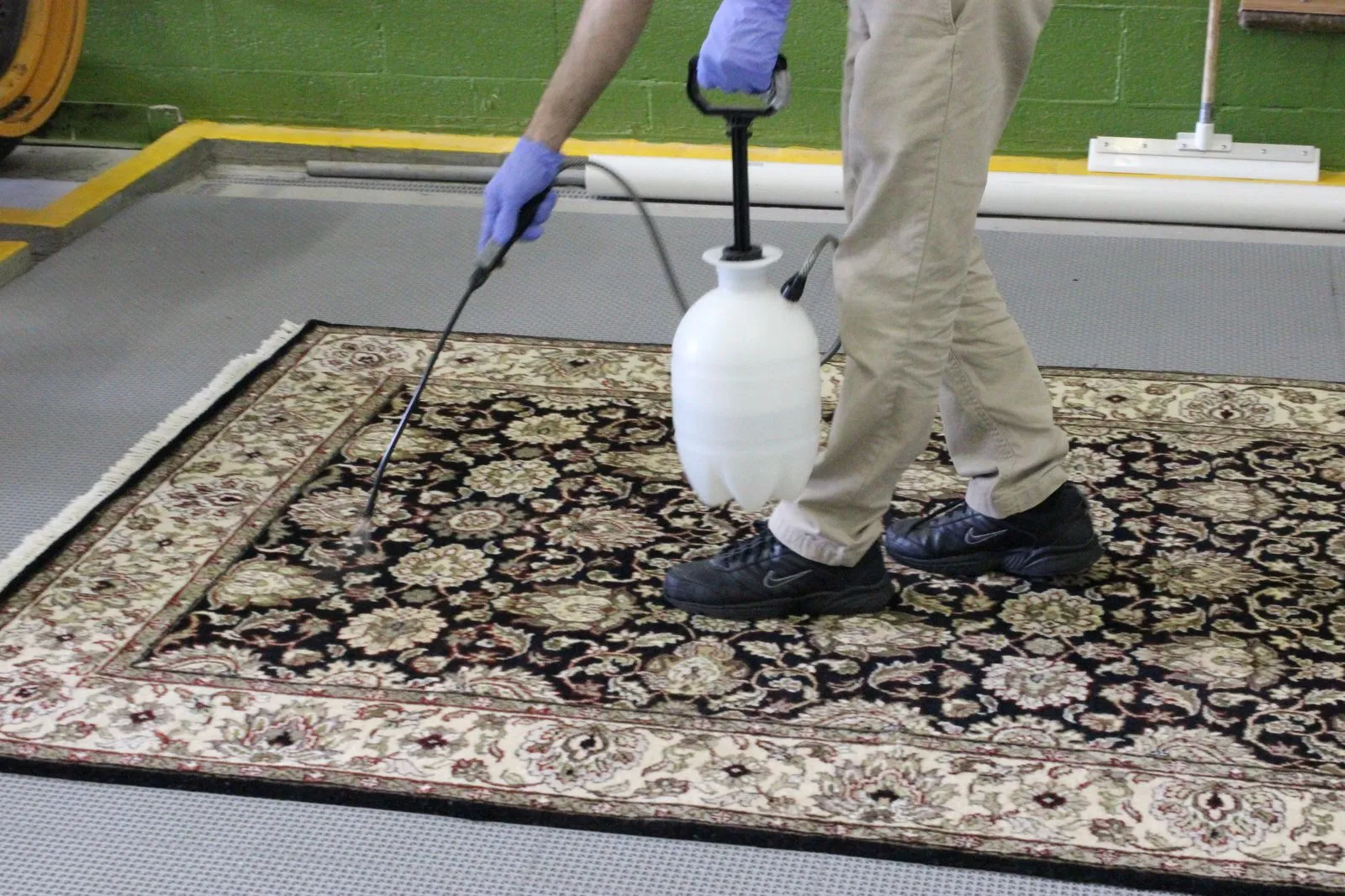
In-plant washing reaches it. The rug is treated on both faces, washed through its full thickness, and rinsed until the contamination is flushed out of the foundation — not sealed under a fragrance. Then it dries completely, verified by moisture meter, so nothing is left to reactivate.
What we actually do
At inspection we locate every deposit — including ones you don’t know about — and check whether urine has already altered dyes or weakened the cotton foundation. You get the honest picture before we quote.
Affected areas get targeted pre-treatment formulated for urine salts, applied to both the face and the back of the rug, before the full wash begins.
The complete seven-step wash follows — dusting, shampoo, and a thorough cold-water rinse that flushes dissolved contamination out of the foundation instead of pushing it deeper.
Days in the controlled drying room, released only when moisture meters confirm the rug is dry to the core. In our climate, complete drying is half the odor battle.
The honest part
No — and anyone who promises otherwise hasn’t seen your rug yet.
Fresh accidents on colorfast rugs usually clean up very well. But urine that has sat for months can permanently shift dyes — that yellowed halo may be a dye change, not a stain — and repeated soakings can weaken the foundation itself. Washing removes the contamination and the odor source; it cannot un-bleach a dye.
So here is our promise, and it’s the honest kind: we’ll tell you at the inspection what treatment can realistically achieve for your rug, what it will cost, and whether we think it’s worth doing. If the damage is beyond what washing can fix, you’ll hear that from us first — not after the bill.